
PHOTO CREDITS : Anna Leonte Loron
Based between Marseille and Paris, Marion Mailaender develops a singular practice at the crossroads of interior architecture and design. Trained at École Boulle, she nourishes her work with vernacular references, everyday objects, know-how, and encounters with the artists and craftspeople around her. Her intuitive and sensitive approach readily plays with uses, materials, and unexpected associations.
For Sessùn’s 30th anniversary, Marion Mailaender imagines a scenography conceived as a sensitive and contemporary reflection around the Divine bag, its lines, its presence, and what it contains, extending the exploration of materials, gestures, and know-how that runs through the exhibition.
We met her to look back on her career, her inspirations, her attachment to Marseille and Paris, and this very personal way she has of looking at objects and places in order to better reinvent them.


Can you tell us about your background and what led you to become an interior architect and designer? Over the years, what has shaped the way you imagine spaces and objects?
I grew up in Marseille. My parents had artist friends whom I admired. After graduating from high school, I was lucky enough to study at École Boulle in Paris, where I was able to spend time with the craftspeople being trained in the school’s workshops. It is a great privilege to have a school that brings together the different people involved in interior architecture and design in one place.


What are your main sources of inspiration? What role do everyday objects play in your work?
I draw inspiration from what surrounds me: the city, artists, and artists’ studios, which I always find incredibly ingenious. In fact, this also ties in with my interest in vernacular architecture and design, which for me are the best source of inspiration.


You like to mix genres and periods, and to repurpose everyday objects or materials. What attracts you to these unexpected associations?
What attracts me to this is the freedom it gives to create something new. I compare it to sampling in music: it is exactly the same creative process.
You divide your time between Paris and Marseille. Do these two cities influence your perspective in different ways?
Absolutely, they are two complementary cities and I need the energy of both. I like to say that I have dual nationality.

How did the idea for this scenography for Sessùn’s 30th anniversary come about, centred around what one might find inside a bag?
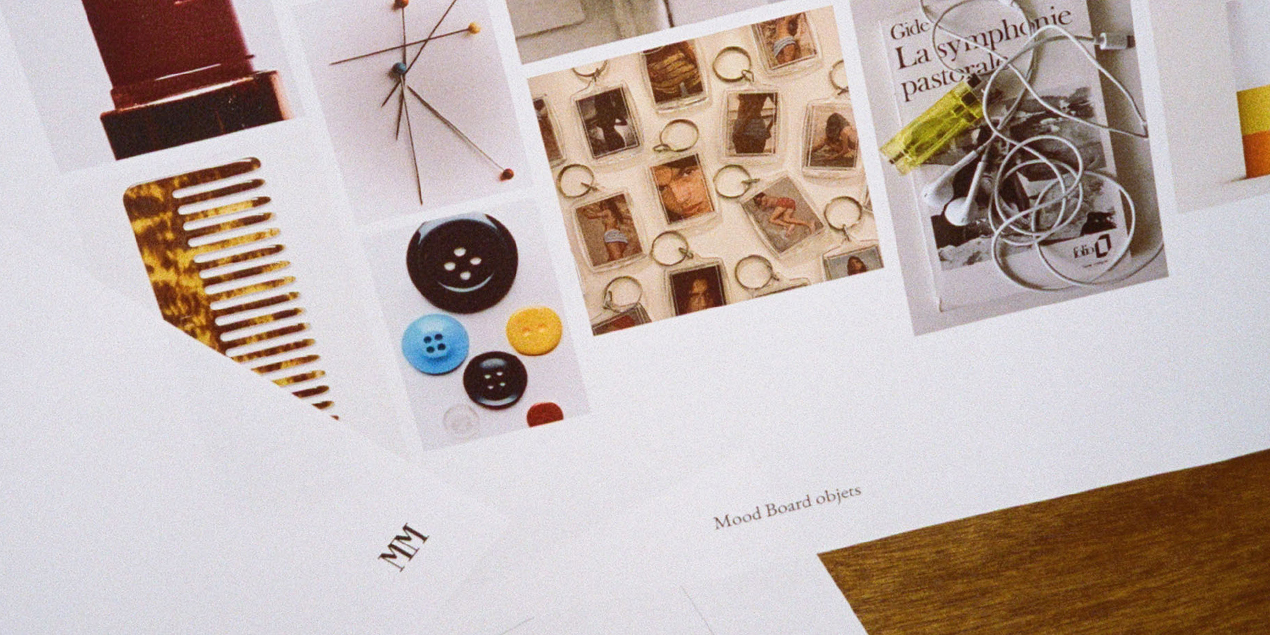
The idea came from a very simple gesture: imagining that someone’s bag is turned upside down. Here, it is the Divine, the silhouette that embodies the house. The Sessùn bag is a designed, recognisable object, but we wanted to look at what lies behind it, at what the customer actually carries inside. We drew on the work of Russian photographer Sergei Stroitelev, who spent several weeks in Saint Petersburg asking women he did not know to reveal the contents of their bags. This almost anthropological approach, revealing intimacy through ordinary objects, greatly inspired us in creating this scenography for the 30th anniversary.


Among all the everyday objects, how did you choose those that would be featured in the installation and how they would be staged?
We started from reality: what do we find in our own bags, and in those of the people around us? This spontaneous collection served as our raw material, with a few nods to the Sessùn universe woven in. The slightly offbeat gesture of recreating this bag on a large scale, as if it had just been turned upside down, is also part of the staging.
How did you find the balance between your own universe and Sessùn’s identity in this installation?
It is the very essence of our profession: listening to the other person’s universe in order to step into it and bring a singular perspective. For Sessùn, the balance came through the material.


You have been close to Emma François Grasset for many years and have seen Sessùn evolve over time. How has this relationship informed your approach to this scenography ?
I deeply admire the work Emma has built with craftspeople over the years. For her, it is not a trend, but a conviction that has always been deeply rooted, and I have had the chance to see fantastic collaborations emerge over time. It is this way of bringing people together that shaped my perspective on this scenography.


